
Author's note:
Following on from the reflections on contemporary lace in Part 2 of the series ‘Lace in the Context of European Fashion History’, the following articles focus on the inspiring influences on today’s textile artists.
To highlight the broad spectrum of the current art scene, I have categorised the works of selected artists according to specific movements. However, as the works presented are multifaceted and cannot be rigidly confined to any single category, this classification is based on my personal perception – it is intended as a defining facet in each case – and ultimately serves only to provide a clearer overview.
An insight into the diversity of the scene
Naturally, the selection of artists can only be illustrative and therefore does not fully do justice to the actual diversity of the scene. The articles in the ‘Contemporary Leading Artists’ series are therefore intended rather as an inspiration for my readers to set out on their own journey of discovery and see for themselves just how boundless creative work in the field of bobbin and needle lace can be today.
A heartfelt thank you
Special thanks go to the artists who have supported this series: they have provided me with either their own photographs or works by photographers who have granted the rights of use for these articles. I am delighted by this generous gesture – the wonderful visual material enriches the entire series immensely.
Foto: Eigene Aufnahme
Contemporary
Lace Art - Part 1
Digital Code & Pixel Logic: The Calculation of Structure
2026-10-16 - Roswitha Bühler
A first distinct trend focuses on the fascinating dialogue between craftsmanship and digitalisation. In the category ‘Digital Code & Pixel Logic: The Calculation of Structure’, the systematic crossing and twisting involved in bobbin lace-making is understood as a primordial form of modern programming. Instead of historical bobbin lace patterns, algorithmic calculations, digital glitches and software-assisted processes now determine the analogue handiwork on the bobbin pillow.
As representatives of this trend, I would like to introduce two artists:
Veronika Irvine (Canada)
The Mathematical Topology of the Bobbin Lace Pillow
As a computer scientist with a PhD and a passionate textile artist, Veronika Irvine bridges the seemingly contrasting worlds of theoretical computer science and traditional textile craftsmanship. Rather than viewing the bobbin pillow merely as a subject of historical reconstruction, she regards it as a complex topological system. In her PhD thesis at the University of Victoria, she developed a mathematical model that formalises the centuries-old techniques of lace-making, which have often been passed down purely through empirical tradition [1].
On the Carol Shen Gallery website, Veronika Irvine explains how she uses modern insights from graph and braid theory to describe bobbin lace-making with precision. Her approach is based on the idea of representing four-strand braids as objects and the path of the threads between them as relationships. In doing so, she translates craft-specific characteristics into mathematical rules: the requirement that the fabric must hold together, for example, is defined as a connected graph. By constantly comparing theory with practice, she continually refines this set of rules. Graphs that cannot be realised lead to new supplementary rules, whilst the analysis of historical patterns prevents the guidelines from becoming too restrictive.
She subsequently translated this mathematical description into a computer algorithm. The programme had examined trillions of potential combinations and generated over 5 million new lace patterns – a massive leap compared to the fewer than 1,000 patterns from the past 500 years. She eventually produced some of these entirely new, aesthetically pleasing designs by hand as physical pieces of lace [2].
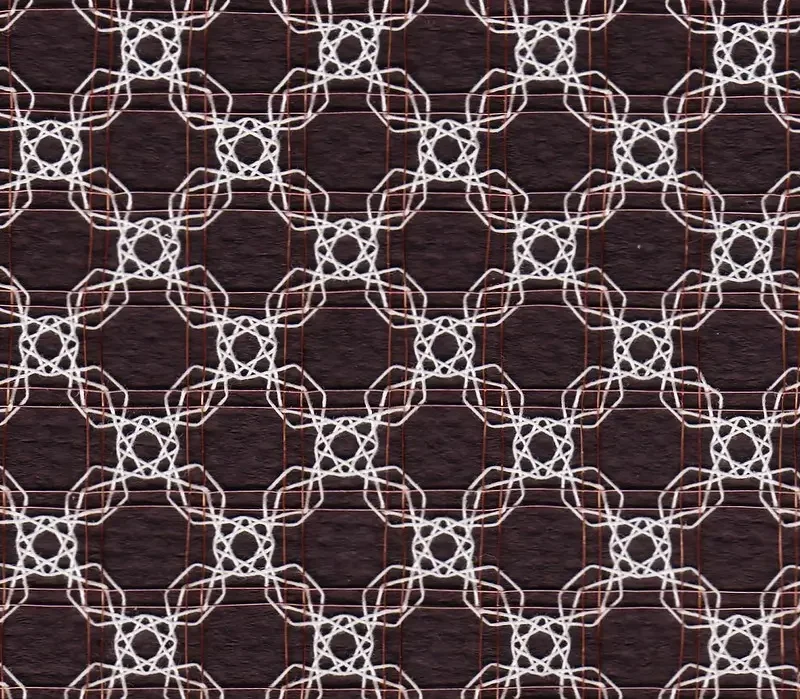
Fig. 1 : ‘White roses on a copper trellis’; the photograph was kindly provided by Veronika Irvine.
The creative essence of this algorithmic leap is embodied in her ongoing project, TesseLace (or Tessellating Lace). In traditional European lace-making, the so-called bobbin lace grounds played a purely supporting role for over five centuries. As lace is traditionally produced in a single colour, these recurring background patterns merely provided the necessary contrast to visually highlight the actual main motifs – such as floral elements or portraits. With TesseLace, Irvine radically subverts this historical hierarchy: Inspired by colour-field painting and Abstract Expressionism, she isolates the bobbin lace backgrounds and elevates them to the central, independent subject of her art.
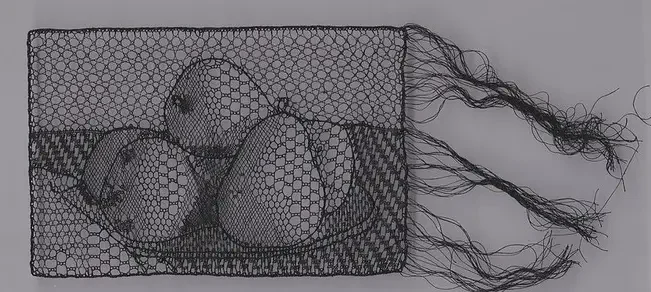
Fig. 2 : ‘pears on a plate’; the photograph was kindly provided by Veronika Irvine.
To make the astronomical flood of computationally generated patterns usable for this analogue craft, Irvine applies specific algorithmic filters within the framework of TesseLace. Her focus lies in the search for extraordinary crystallographic symmetry groups, in particular triple and sixfold rotations as well as reflections. Such symmetries were completely unknown in classical bobbin lace-making due to the purely orthogonal or diagonal logic of the traditional thread pattern, and they push the boundaries of purely human craftsmanship intuition [3].
Her work *Delle Caustiche* (*Sagittarius Star Cloud*) is a textile testament to this symbiosis of mathematical rigour and aesthetics. It is based on a hexagonal lattice with a complex *632* symmetry. The flat structure has subsequently been transformed into a three-dimensional, curved disc and is held in shape by thin copper wire [4] .
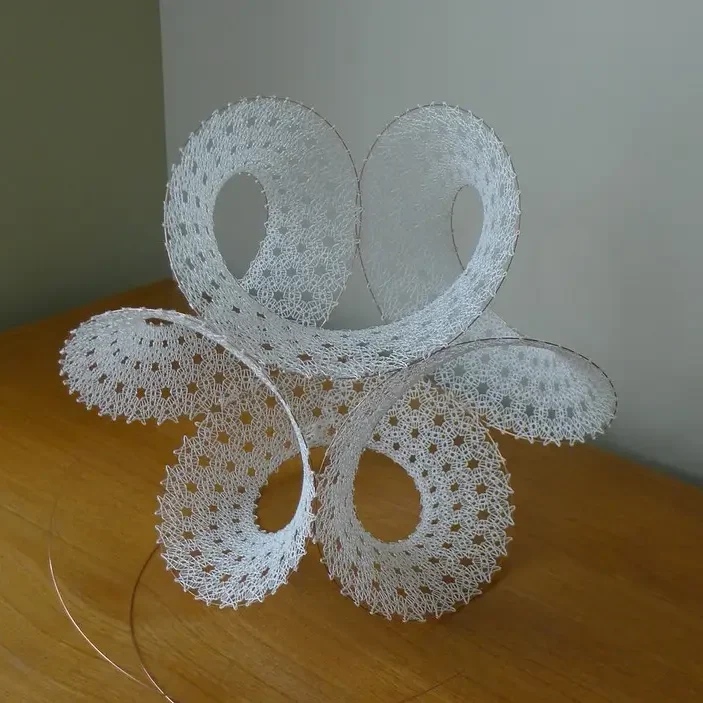
Fig. 3 : ‘Delle Caustiche (Sagittarius Star Cloud)’, a photograph kindly provided by Veronika Irvine.
In addition to her own artistic practice, TesseLace also has a strong open-source component: Irvine makes her discoveries available to the global lace-making community via an open, digital index. Using interactive vector graphics, lace-makers worldwide can precisely follow the newly calculated thread patterns, print them out and bring them to life on their own bobbin lace pillows [5].
Irvine’s research has a strong educational aspect that extends beyond the art world itself: she uses this computer-assisted art to help at-risk secondary school pupils develop stronger metacognitive skills in mathematics and computer science as part of outreach work. Through self-directed design, the young people establish an intuitive connection to mathematics and logic. According to Irvine herself, this same artistic connection also helped her to strengthen her own perseverance and deep understanding of these scientific disciplines [6].
If you’d like to find out more about how Veronika Irvine works or view photos and videos of her, I recommend visiting her website: https://linktr.ee/tesselace
Lisa Marks (USA)
Algorithmic Empathy in Medicine
Designer and professor Lisa Marks combines cutting-edge computer technology with traditional craftsmanship to help people. In 2019, she was awarded the prestigious Lexus Design Award for her groundbreaking project ‘Algorithmic Lace’. She designs bespoke, three-dimensional lace bras for women who have undergone a mastectomy following breast cancer.
The problem: standard underwear doesn’t fit
Statistics show that up to 60 per cent of affected women decide against breast reconstruction – a conscious choice also known in medical terms as ‘going flat’. There is hardly any suitable, pain-free underwear on the market for these asymmetrical or flat body shapes. As every scar and every body is completely unique following such an operation, standard industrial sizes fall short [7].
The solution: high-tech meets tradition
Marks solves this problem by combining mathematics with a 16th-century Croatian bobbin lace technique. The bra is made to measure in four steps:
• 3D body scan: The woman’s upper body is digitally scanned in three dimensions with millimetre precision.
• Computer-aided adaptation: An algorithm adapts the traditional bobbin lace pattern precisely to the scanned body contours. The women play an active role in the design process: the pattern can be programmed so that the lace is thicker over sensitive scars to prevent chafing, or to create the visual illusion of a symmetrical shape.
• 3D mould from the milling machine: The finished computer model is transferred to a foam bust, which is precisely milled by a computer-controlled milling machine.
• Handcrafted: On this bespoke mould, craftswomen create the pattern by hand using fine, genuine lace.
The result: comfort and dignity
The finished bra requires no constricting underwires or elastic bands. Its stability and comfort stem solely from the mathematically precise interlacing of the threads [8].
Marks’ work shows that computer code does not have to be cold, but can become a tool for compassion (‘algorithmic empathy’). It restores a sense of dignity, aesthetic appeal and quality of life to women following a major medical procedure.
(This translation was produced using DeepL. If any errors have crept in or if any technical terms have been translated inaccurately, I would be very grateful for your feedback.)
⟵ Back to the 21th century: Part 2 - Lace Recoded
⟶ Read more about the Contemporary Lace Art - Part 2: The global lace network: The Adventurous Lacemakers
----------------------------
Bibliography List of References
[1] Irvine, Veronica, Lace Tessellations: A mathematical model for bobbin lace and an exhaustive combinatorial search for patterns, Dissertation 2016.
[2] https://carolshengallery.wordpress.com/technically-beautiful/veronika-irvine/, accessed online on 21.09.2026.
[3] https://tesselacedotcom.wordpress.com, accessed online on 21.09.2026.
[4] https://gallery.bridgesmathart.org/exhibitions/2017-bridges-conference/virvine, accessed online on 21.09.2026.
[5] https://tesselacedotcom.wordpress.com/tools/, accessed online on 21.09.2026.
[6] https://carolshengallery.wordpress.com/technically-beautiful/veronika-irvine/, accessed online on 21.09.2026.
[7] https://discoverlexus.com/stories/lexus-design-award-2023/past-winners/2019-grand-prix-winner and https://newsroom.lexus.eu/algorithmic-lace-by-lisa-marks-wins-top-2019-lexus-design-award-at-leading-with-light-exhibition-in-milan/, accessed online on 22.09.2026.
[8] https://id.gatech.edu/saving-hand-crafts-through-algorithms, accessed online on 22.09.2026.